
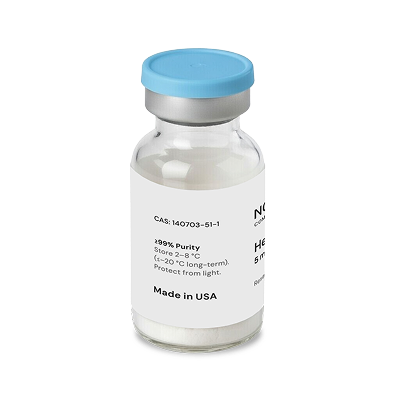
Novera Hexarelin
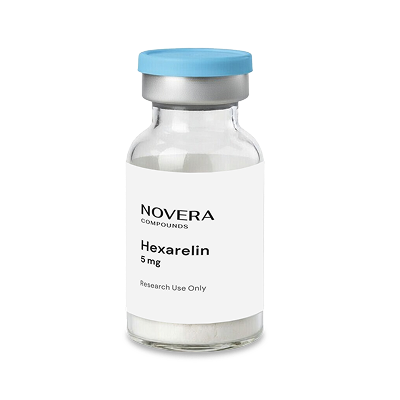
There is a certain category of peptide compounds that keeps appearing in endocrine and performance-related discussions, not because they are new, but because researchers continue revisiting them under different experimental conditions. Novera Hexarelin belongs to that space. The compound is typically determined as a growth hormone releasing peptide with strong receptor affinity and a comparatively stable profile during controlled laboratory procedures. In most catalogs, Hexarelin is supplied as a freeze dried material inside sealed vials, intended strictly for laboratory research and analytical work rather than direct clinical use.
Hexarelin is a synthetic hexapeptide. The sequence commonly references ala TRP motifs alongside additional amino acid structures associated with ghrelin receptor interaction. Researchers often classify it within the broader class of growth hormone secretagogue receptor agonists because of how it interacts with endocrine signaling pathways connected to GH secretion and hypothalamus activity. Some publications and supplier documentation also connect the compound to studies involving muscle wasting, lipid metabolism, and biological activity linked to pituitary gland stimulation.
Synthetic Peptide Classification
Novera Hexarelin peptide preparations are generally supplied as lyophilized powder for better stability during shipment and storage. The freeze dried format reduces the risk of rapid proteolytic degradation, which matters during handling research peptides over extended timelines. Depending on the concentration and research design, reconstitution procedures may vary between facilities, although scientists usually attempt to minimize contamination and prevent freeze thaw cycles that could alter molecular integrity.
What Novera Hexarelin Is Made From
Hexarelin belongs to a category of synthetic compounds designed to mimic certain signaling mechanisms associated with endogenous ghrelin pathways. Unlike naturally occurring peptide chains, this synthetic hexapeptide is engineered for receptor binding studies and controlled vitro analysis where consistency matters more than biological variability. Analytical documentation typically notes that Hexarelin has a molecular weight of 887 g/mol alongside purity and stability specifications.
Structural Characteristics Researchers Evaluate
Scientists who work with endocrine compounds often pay attention to several structural characteristics before utilizing a material in ongoing projects:
- peptide sequence stability under laboratory conditions;
- resistance to enzymatic breakdown and proteolytic degradation;
- receptor affinity involving the ghrelin receptor;
- compatibility with analytical methods such as RP HPLC.
Some laboratories also evaluate carrier protein interaction during experimental preparation stages, especially in studies involving prolonged incubation or transport media. Because Hexarelin is determined to be resistant to several destabilizing mechanisms compared to shorter unstable compounds, it is frequently utilized in long-duration observation models where repeated measurements are required.
The reported molecular weight is usually expressed in g mol notation within supplier certificates, alongside purity rating and storage conditions. Certain analytical sheets additionally write details regarding additives, supplied concentration, and recommended material handling procedures. These documents matter more than marketing language in serious research environments.
Why Researchers Study Hexarelin
Research Hexarelin projects are often associated with endocrine regulation and GH secretion dynamics. The compound has been investigated in models involving the pituitary structure and hypothalamus signaling systems, particularly where growth hormone regulation is considered relevant. Although many discussions online blur the line between research and therapeutic speculation, professional laboratory environments generally separate scientific exploration from verified clinical applications.
Common Areas of Scientific Exploration
Several recurring research applications appear in published and experimental literature:
- endocrine pathway observation;
- muscle metabolism and muscle tissue signaling;
- lipid metabolism analysis;
- receptor binding studies involving growth hormone secretagogue receptor activity;
- non human experimental models examining biological activity;
- controlled vitro response evaluation.
Some investigators are interested in how Hexarelin affects hormone related compounds associated with recovery signaling. Others focus on how the peptide behaves under stable laboratory conditions rather than on visible physiological effects. There is also continuing interest in how synthetic growth hormone releasing peptide formulations compare to earlier generations of secretagogues in terms of receptor selectivity and degradation resistance.
In research settings connected to muscle wasting analysis, the peptide has occasionally been utilized alongside broader endocrine protocols. That does not automatically imply approved therapeutic use or accepted clinical use, though those distinctions are often ignored outside scientific environments. Serious researchers tend to separate exploratory findings from established medical evidence.
How Hexarelin Works in Experimental Models
The mechanism behind Hexarelin begins with interaction at the growth hormone secretagogue receptor, which is closely related to the ghrelin receptor family. Once receptor activation occurs under suitable experimental conditions, signaling pathways connected to GH secretion may become stimulated. Researchers examining hormone related formulations frequently observe downstream activity involving both the hypothalamus and pituitary gland.
Receptor Interaction and Signaling Activity
That interaction is one reason Hexarelin is sometimes described as a potent growth hormone regulation agent. The peptide does not operate randomly inside laboratory models. Its structure was designed specifically for receptor affinity and signaling efficiency. Because Hexarelin is a synthetic peptide rather than a naturally secreted hormone, scientists can monitor more controlled activity patterns during analysis.
Why Laboratories Work With Growth Hormone Releasing Peptides
- comparatively durable peptide structure;
- measurable biological activity during vitro testing;
- compatibility with metabolic signaling research;
- potential relevance to lipid metabolism observation;
- resistance against rapid enzymatic degradation;
- easier concentration standardization after solution preparation.
Some studies attempt to determine how prolonged exposure affects endocrine signaling balance. Others focus almost entirely on receptor mechanics and intracellular response. The effects observed in one experimental environment may not appear under different laboratory conditions, which is why properly documented protocols remain important.
Storage Conditions, Reconstitution, and Proper Handling
Storage can influence peptide stability more than many inexperienced handlers realize. Novera Hexarelin is commonly stored desiccated before solution preparation, usually in temperature-controlled laboratory environments. Because the substance is frequently supplied as lyophilized powder, moisture exposure should remain minimal until preparation begins. For long-term preservation, many laboratories store lyophilized Hexarelin below -18°C in controlled storage environments.
Laboratory Handling Procedures
Scientists handling research peptides generally follow several standard procedures:
- keep sealed vials away from direct light exposure;
- maintain stable cold storage conditions;
- avoid repeated freeze thaw cycles;
- use sterile equipment during reconstitution.
After reconstitution, peptide solutions may gradually lose stability depending on concentration, solvent selection, and exposure duration. Some analytical references note that Hexarelin is stable at room temperature for up to 3 weeks under controlled conditions. In certain research environments, additives such as 0.1% HSA or BSA may be utilized after reconstitution to help maintain stability during long-term storage.
Proper handling becomes especially important during long-term analysis projects involving multiple sampling intervals. Laboratories attempting to preserve biological activity often reduce unnecessary temperature fluctuation and repeated air exposure. Upon reconstitution, some laboratories store Hexarelin at 4°C for approximately 2–7 days before preparing fresh solutions for additional analysis.
Analytical documentation supplied with Novera Hexarelin products may include storage recommendations, RP HPLC analysis reports, purity rating information, and batch verification details. Some manufacturers also link supplementary material regarding handling research peptides and maintaining stable peptide environments. Those details are not decorative additions; they are part of responsible laboratory practice.
Research Environments and Experimental Use
Hexarelin appears most frequently in endocrine and metabolic research environments rather than casual peptide screening projects. Researchers examining hormone-related compounds often compare it against alternative secretagogues to determine relative receptor response and signaling intensity. Because Hexarelin is resistant to several destabilizing processes, it can sometimes remain viable longer during repeated experimental handling.
Experimental Research Applications
In certain non human laboratory models, investigators explore the relationship between metabolic signaling and muscle tissue maintenance. Some projects examine fat metabolism response under controlled dietary conditions, while others focus on receptor activation thresholds and downstream hormonal markers. The peptide has also been utilized in comparative studies involving synthetic formulations from the same class of growth hormone secretagogue receptor agonists.
A few areas where research Hexarelin may appear include:
- endocrine regulation studies;
- peptide receptor analysis;
- metabolism-related laboratory research;
- GH secretion monitoring;
- experimental compounds comparison projects.
Despite recurring discussion around therapeutic possibilities, most professional suppliers clearly specify that products are intended for laboratory research only. References to human or veterinary use are generally included as restrictions rather than endorsements. The distinction matters because research-grade substances are not automatically manufactured according to pharmaceutical clinical standards.
Stability and Analytical Characteristics
One reason Hexarelin continues attracting attention among researchers is its relatively stable behavior compared with fragile peptide material prone to immediate breakdown. Stability can influence everything from transport logistics to reproducibility during repeated assays. Formulations with inconsistent degradation profiles often create unreliable data, especially in hormone related research where small variations may alter interpretation.
Analytical Documentation and Purity
Hexarelin preparations are commonly analyzed through RP HPLC methods to determine purity and peptide integrity. Supplier documentation may also include molecular formula verification, batch analysis, concentration data, and related details concerning additives or carrier protein interaction. Some scientists prefer substances with high purity rating because contaminants may interfere with receptor binding studies or downstream signaling analysis.
The peptide is also described in certain literature as comparatively resistant to rapid proteolytic degradation. That characteristic does not make the material indestructible, but it may improve consistency during controlled handling. When properly stored desiccated and maintained under recommended storage requirements, the peptide generally retains stronger analytical reliability than unstable alternatives exposed to poor handling procedures.
Why Buy Novera Hexarelin at DKdermal
Hexarelin is intended strictly for laboratory research use, but the peptide market contains many fraudulent or counterfeit products. Professional laboratories often prioritize legitimate suppliers of Hexarelin that provide independent third-party testing results. DKdermal emphasizes controlled storage environments, verified batch information, and laboratory-focused packaging standards intended to support reliable peptide stability throughout transport. Proper storage location selection is also important to help prevent freeze thaw cycles that may negatively affect peptide integrity during long-term laboratory handling.
Price Match
At DKdermal, we’re dedicated to offering competitive pricing on medical and aesthetic products. As part of that commitment, we’ve excited to introduce a price match program to help you make the most of your purchases.
If you find the same product offered at a lower price by another verified supplier, let us know. We handle each request individually, and if the following criteria are met, we’ll gladly consider adjusting our price:
- The competitor’s invoice should be no older than two months;
- It must be issued by a legitimate, verifiable supplier;
- The lower price must not be part of a first-time buyer promotion or a loyalty points discount.
Simply send us the qualifying invoice, and we’ll do our best to provide pricing that keeps DKdermal your go-to supplier for value and service.