There’s a quiet revolution happening in the world of facial rejuvenation. Gone are the days when the only path to smoother, fuller skin involved surgery or weeks of recovery. Today, science and artistry merge inside a tiny syringe, offering subtle transformations that can roll back the years in minutes. Two of the biggest names behind this revolution are Sculptra and Juvederm — and though they share a common goal, their journeys to get you there couldn’t be more different.nnn
Before choosing your path to a more youthful appearance, it’s worth understanding how each works, what results you can expect, and which might best suit your personal preference. Let’s dive deep into Sculptra vs. Juvederm cost, results, and their real-world performance.
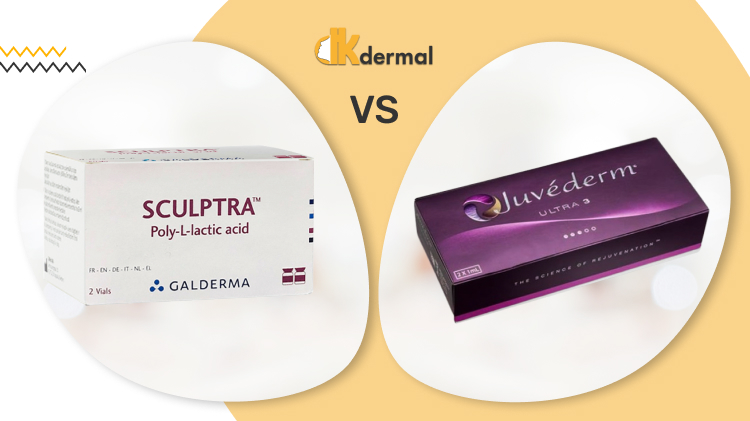
Both Juvederm and Sculptra fillers fall under the broad category of dermal fillers, a group of cosmetic treatments designed to reduce wrinkles, smooth deeper creases, and restore facial volume lost over time. Yet their methods are fundamentally distinct.
Juvederm is a family of dermal fillers made with hyaluronic acid, a naturally occurring substance in our bodies that keeps skin hydrated and plump by attracting moisture and binding water molecules. The result? A gel like substance that offers instant volume, perfect for those who want immediate results with minimal downtime.
Sculptra, on the other hand, takes a slower, more biological route. Rather than filling areas instantly, Sculptra injections use l lactic acid (PLLA) — it helps the body stimulate collagen production naturally over time. The result builds gradually, leading to natural volume that can last up to two years or longer.
At the heart of Juvéderm treatment lies hyaluronic acid serums, the same ingredient found in many skincare products but at a much higher concentration. This gel like consistency works by binding water molecules beneath the skin, instantly softening smile lines, marionette lines, and severe nasolabial folds. The carefully selected Juvéderm ingredients, including cross-linked hyaluronic acid and lidocaine, ensure smooth texture, lasting hydration, and comfortable injection results.
Because it delivers immediate correction, Juvederm injections are ideal for those who want visible improvement right away. The treatment process is straightforward: a topical numbing cream is applied to minimize pain, and the filler is injected strategically into the treatment area to enhance facial contours or perform lip augmentation.
Most patients notice a smoother, more lifted look almost immediately. There may be some swelling, but it usually subsides within days. For many, Juvederm delivers that “weekend refresh” effect — quick, reliable, and noticeable.
If Juvederm is the sprinter of dermal fillers, Sculptra is the marathon runner. Rather than acting as a temporary plumper, Sculptra injections work deep within the dermis to encourage the body’s natural collagen production. The active ingredient, l lactic acid (PLLA), is a biocompatible and biodegradable material long used in medical sutures. Over time, it triggers your body to stimulate collagen production, rebuilding the skin’s support structure from the inside out.
This approach means the changes are gradual — subtle at first, but transformative over several weeks. Because collagen develops over time, up to three treatment sessions are typically recommended, spaced a few weeks apart, to achieve desired results. While it doesn’t give volume immediately, it offers something arguably better: lasting firmness and lift that can endure up to two years.
Both Juvederm and Sculptra offer impressive results but take very different paths to get there — one provides instant lift, while the other works by enhancing the body’s natural collagen production. This makes each a powerful yet distinct treatment option for restoring balance, volume, and youthful vitality to the face.
During a Juvederm treatment, practitioners often use a topical numbing cream to minimize pain. The filler’s smooth texture allows for even placement, and most patients experience only mild swelling afterward.
Sculptra, while similar in procedure, involves multiple sessions, often up to 3 sessions, and the results develop progressively. Because the injections go deeper, you may feel minor tenderness or even joint pain the following day, but this typically fades quickly.
Because Juvederm adds volume immediately by injecting a gel like substance, results are visible right away. The outcome is soft, smooth, and pliable, maintaining a youthful appearance without an “overdone” look.
Sculptra, conversely, provides natural looking volume because the fullness comes from your own collagen matrix. It delivers a subtle lift and more youthful looking skin that feels like your own — because it is.
While Juvederm fillers may require periodic touch-ups every 6–12 months, Sculptra fillers tend to last longer but need additional maintenance treatment sessions to sustain the results over time. In both cases, many patients appreciate that ongoing care keeps their results consistent and refined.
The question of Juvederm vs. Sculptra cost isn’t straightforward. Juvederm often costs less per session because you need fewer appointments, but its results fade sooner. Sculptra costs more upfront, given its up to 3 sessions requirement, yet its effects can last much longer — offering better long-term value for those committed to gradual improvement.
Patients prefer Juvederm when they seek immediate results — perhaps before an event or photo shoot. It’s perfect for anyone new to filler injections, or those targeting specific lines or areas. Its smooth gel like consistency integrates beautifully into tissues, offering instant correction for deeper creases and quick hydration thanks to water that help plump the skin.
Because hyaluronic acid is a natural substance, the filler can also be reversed if the patient wishes. This flexibility makes Juvederm one of the most popular aesthetic treatments worldwide. If you crave immediate volume and noticeable lift, this treatment option may be your ideal choice.
Sculptra fillers are for those who take the long view — people seeking sustainable, biologically driven change. It’s particularly beneficial for volume loss and sagging skin that occur with age. Because it encourages new collagen formation, the effects feel authentic, with improvements unfolding naturally over weeks and months.
This filler shines for those who value gradual, natural looking volume rather than instant plumping. While you may not walk out of your first session looking dramatically different, your skin will quietly improve from within — becoming firmer, smoother, and more radiant with time.
With Juvederm injections, the transformation is instant — you leave the clinic with smoother skin, softened lines, and visibly enhanced facial contours. Many patients experience only brief swelling, and the results typically last 9–12 months before requiring a touch-up.
With Sculptra, patience is key. Over the course of up to three sessions, spaced several weeks apart, your skin gradually produces collagen, restoring lost facial volume. As this happens, the skin looks firmer, lifted, rejuvenated and endures up to 2 years.
Both fillers are FDA-approved and considered safe when administered by qualified professionals. Sculptra injections may cause temporary swelling, tenderness, or even joint pain, while Juvederm injections can occasionally lead to slight bruising or redness. In both cases, these side effects are temporary and mild.
Since Juvederm uses a naturally occurring substance, the body can safely break it down over time. Sculptra’s l lactic acid (PLLA) is also biocompatible, meaning it dissolves naturally as collagen replaces it.
Many practitioners combine dermal fillers like Juvederm and Sculptra for a tailored approach. For example, Juvederm may be used to instantly enhance lips or fill lines, while Sculptra works behind the scenes to rebuild collagen and support long-term structure. Together, they can address both instant correction and sustained firmness.
Before either procedure, a numbing cream is applied to ensure comfort. Most describe the sensation of filler injections as a light pinch. The practitioner then massages the treatment area to evenly distribute the filler. For Sculptra, post-injection massage is especially important: it helps spread the gel like substance evenly and encourages smoother results.
Both treatments are quick, often completed within 30–45 minutes, and require little to no downtime. That convenience makes them two of the most popular cosmetic treatments today.
Choosing between Sculptra and Juvederm ultimately depends on your goals, patience, and preference:
Both can beautifully enhance facial contours, restore youthful skin, and tackle all the concerns without surgery. Whether you want a quick fix or a slow-burn transformation, these dermal fillers offer paths to the same destination: confidence in your reflection.
In the realm of dermal fillers, Juvederm delivers instant satisfaction with its gel type substance that hydrates, lifts, and smooths the skin immediately. Sculptra, by contrast, plays the long game — retraining your body to build its own support network through collagen.
The truth is, both are powerful tools in the hands of skilled injectors. Your choice depends on whether you want a flash of instant radiance or a slow bloom of restored youth. Either way, the result is unmistakable — a youthful look that feels effortless, natural, and entirely yours.
Sculptra works by stimulating your body to produce collagen over time, while Juvederm provides instant volume using hyaluronic acid. Sculptra offers gradual, long-lasting results, and Juvederm gives immediate correction.
Juvederm typically lasts 6–18 months depending on the formula and area treated. Sculptra results can last up to 2 years since it rebuilds your skin’s natural structure.
Yes, many practitioners combine both to address different needs. Juvederm adds volume, while Sculptra supports deeper collagen regeneration for long-term firmness.
Both treatments can cause mild swelling, tenderness, or redness that typically fades within days. Serious side effects are rare when performed by a skilled injector.
Juvederm is usually less expensive per session but may require more frequent touch-ups. Sculptra costs more upfront but provides results that last longer, often making it a better long-term investment.