
Free Shipping Over $750
|
Estimated Delivery Time 3-7 Days
- Clients Service: 778-806-4900
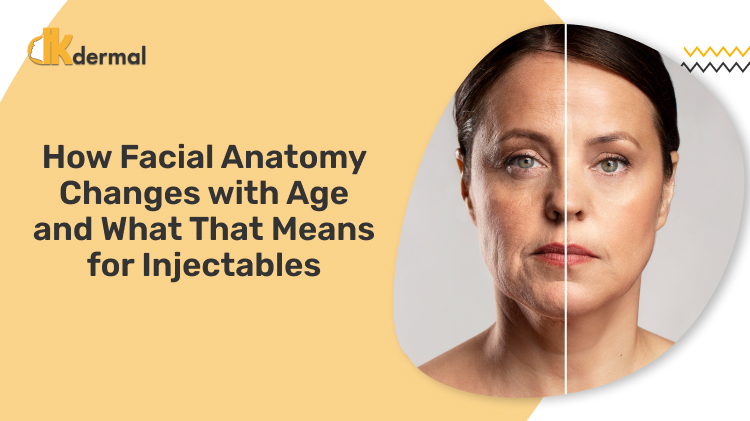
There is no doubt that aging is universal – but how it expresses on the face is uniquely individual. Lines etch themselves where expressions live, volume gradually fades like a slow deflation, and skin begins to drape differently over the underlying structures. For medical injectors, understanding why these changes happen is just as important as knowing how to correct them.
In today’s aesthetic landscape, cosmetic injections such as botulinum toxin and dermal fillers remain at the core of non-surgical facial rejuvenation. But successful – natural, safe, artful – results rely on a deep knowledge of the dynamic anatomical shifts that accompany aging. This guide explores those changes region by region and provides practical, anatomy-based approaches to restoring balance and youthfulness in aging patients.
ON A SIDE NOTE:
Mastering one’s knowledge and techniques is a never-ending process for aesthetic specialists. For instance, regular participation in facial anatomy courses helps injectors maintain and expand their knowledge in aesthetic practices. While profound knowledge of major arteries is critical to prevent injecting into vessels, which can cause severe necrosis, identifying the facial artery is important because it crosses the mandible near the masseter muscle and runs tortuously toward the alar base.
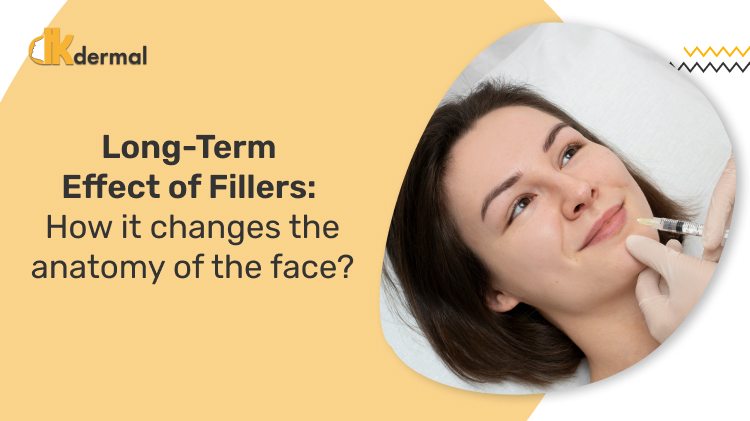
Facial aging is not merely skin deep. It is a simultaneous transformation of skin, fat, muscle, bone, and ligaments, each contributing to familiar signs of aging. Check out how exactly the skin, fat pads, and facial muscles, bones, and ligaments change with time.
Over the decades, the skin loses collagen, elastin, and hyaluronic acid. This results in:
To slow down the above-mentioned skin changes, facial aesthetics specialists with profound anatomical knowledge usually use:
The once-continuous youthful fat compartments separate into distinct superficial and deep pads, each aging differently. While superficial fat pads shift downward, which eventually leads to the appearance of jowls and nasolabial folds, deep fat pads deflate, thus causing hollow temples and midface flattening.
To effectively address the aging fat pads, it is essential for medical professionals to master facial anatomy and improve it with the following dermal filler treatments:
Facial muscles can be broadly categorized into two groups based on their function: elevators and depressors. While some muscles become hyperactive with repeated expression, forming dynamic wrinkles, others lose mass, contributing to disharmony. Here, the precision in muscle identification is essential for neuromodulators to avoid unintended paralysis or drooping.
Above-mentioned facial muscle changes (oftentimes strengthened by overactive facial movements) might be effectively treated with the help of:
Ligaments such as the zygomatic, mandibular, and orbital retain less tension over time. This oftentimes fosters midface descent, deeper lines, and sharply visible tear troughs.
Essential knowledge of facial anatomy suggests that ligaments might be effectively approached through:
When speaking about bones, aging often reduces projection in the maxilla, mandible, and orbital rim. This causes widening of the orbital aperture, retrusion of the midface, and loss of jawline definition.
While perfectly understanding facial anatomy, aesthetic specialists oftentimes use the following aesthetic treatments to revert age-related bone changes:
Now, let us take a little detour across the facial anatomy course and discuss the peculiarities of the upper face, midface, lower face, and neck aging.
Quite frequently, upper face ages through the appearance of horizontal forehead lines, glabellar frown lines, and lateral canthal lines (crow’s feet). Also, brows tend to descent due to soft-tissue shifts and muscle imbalance, thus deepening the superior orbital sulcus.
It is possible to enhance the above-mentioned upper face aging signs with the help of:
Complications related to the aging of the midface include loss of mid-cheek and malar volume, tear trough formation, nasolabial fold deepening, and flattened or inverted V-plane. These changes in the midface heavily influence perceived age, making this region a cornerstone of rejuvenation.
Below-mentioned strategies help to achieve natural results while taking care of the signs of the midface aging:
As the practice of confident injectors shows, the lower face and perioral area age through jowl formation, appearance of marionette lines, chin ptosis, deepening of lip atrophy and perioral wrinkles (“barcode lines”), and mandibular angle blunting.
Practical application of the following approaches might substantially improve the situation:
Additionally, a combined approach to lower-face aging is also worth mentioning. It typically responds best to synergistic use of both fillers and toxin, especially when muscle pull contributes to downward vectors.
Though the neck is not the face itself, harmony between these regions is essential for natural rejuvenation. It ages through the appearance of platysmal banding, skin creping, and loss of cervicomental angle.
According to facial injection anatomy specialists, these treatments turn out to be the most effective when it comes to neck and jawline enhancement:
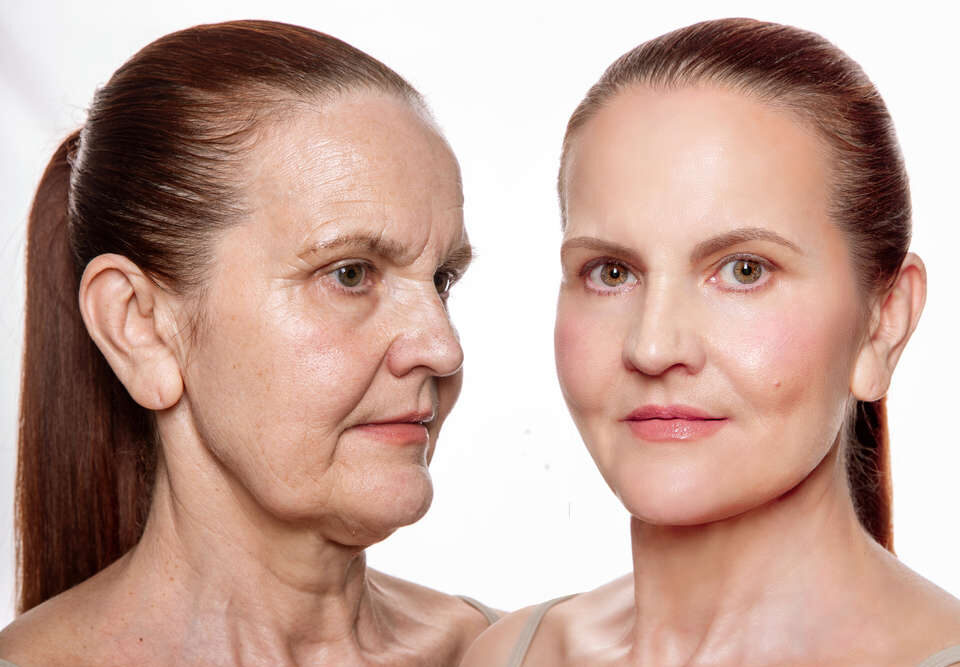
For any aesthetic specialist (including a plastic surgeon, a dermatologist, or a physician assistant), the use of cosmetic injectables to address age-related facial changes requires thorough assessment, detailed safety considerations, advanced training in injection techniques, and a proper selection of the most suitable products.
A thorough consultation evaluates vectors of descent, light reflection patterns, fat compartment changes, muscle hyperactivity, and patient goals (for instance, a natural, refreshed, lifted, youthful, or defined look). Also, it is worth mentioning that modern injectors focus on restoring facial proportions more than simply filling facial lines.
Knowledge of aging anatomy is essential – but so is understanding evolving vascular risk. For example:
Thus, an anatomy-based approach ensures both safety and longevity of results.
To maintain injection safety and, thus, avoid any vascular occlusion, blood vessel breakage, or nerve pathway interruption, injectors have to consider depth as much as location of the treatment zone. For instance, while supraperiosteal injections rebuild bone structure, fat pad augmentation restores foundations. Superficial cosmetic injections, in their turn, refine contours of the face. Thus, cannula vs. needle selection strongly depends on region, product, and risk tolerance.
As clinical papers show, each product behaves differently. Thus, choosing the right one to address the needs of a specific patient is of vital importance. It is important to mention that:
While making the choice, the injector must match product to purpose: firm fillers for structure, soft fillers for mobility areas, hydrating fillers for fine lines.
Because the aging is not linear, patients in their 30s, 40s, 50s, and beyond require tailored approaches.
Key goals of patients in their 30s are subtle refinement, preventative toxin usage, and maintenance of skin quality. Thus, the interventions often include:
40s is the time when the key changes emerge – hollowing, descent, and deeper folds appear. Therefore, the necessary interventions are:
In 50+ patients, multiple layers experience aging simultaneously. Which is why the following interventions are often necessary:
Injectables are often the foundation of non-surgical aesthetic plans – but not the entire plan. Ideal combinations include:
A multimodal strategy enables natural-looking, long-lasting outcomes that respect both anatomy and facial aging.
Understanding how the face evolves with age and paying attention to bone, fat, muscle, ligaments, and skin changes is essential for precise, safe, and elegant aesthetic treatments. For safer injections, mastering these anatomical nuances transforms cosmetic procedures from simple line-filling into true facial artistry.
And when it comes to sourcing high-quality, brand-name cosmetic injectables, DKdermal offers medical professionals a reliable and advantageous place to order dermal fillers, botulinum toxins, and other brand-name rejuvenation products online.
A deep understanding of facial anatomy allows injectors to avoid critical structures such as blood vessels and nerves, reducing the risk of complications like vascular occlusion, tissue necrosis, or unintended muscle paralysis. It also helps practitioners choose the correct injection depth, technique, and product, ensuring more natural and long-lasting aesthetic results.
There is no universal “right age,” as facial aging varies individually. However, many patients begin preventative treatments in their late 20s to early 30s using light botulinum toxin and subtle fillers. More restorative approaches, including volume replacement and structural contouring, are typically introduced in the 40s and beyond as anatomical changes become more pronounced.