
Free Shipping Over $750
|
Estimated Delivery Time 3-7 Days
- Clients Service: 778-806-4900
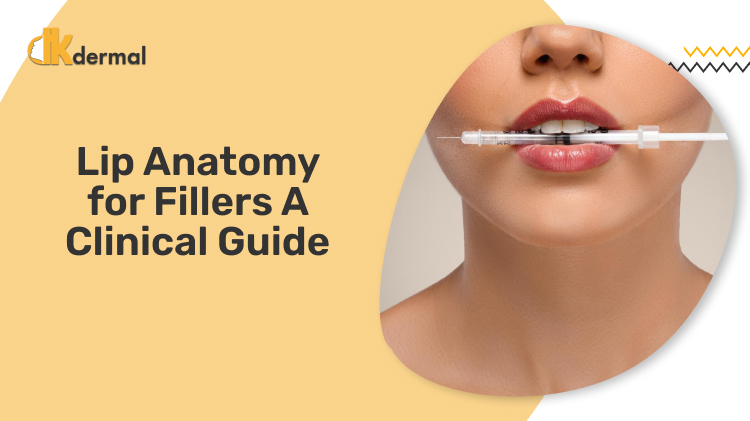
Lip filler treatments have become one of the most requested aesthetic procedures in modern cosmetic medicine, but the outcome depends on much more than product choice or injection speed. A skilled practitioner can create balanced results while reducing serious risks by relying on detailed anatomical knowledge. Understanding how lip anatomy affects treatment planning, injection depth, safety, and final aesthetics is essential for achieving predictable results and minimizing complications.
The lips may appear simple on the surface, yet they contain an intricate combination of muscle fibers, nerves, arteries, fat compartments, and mucosal tissue. Every successful case of lip augmentation starts with anatomical assessment rather than product selection alone. A clinician who understands the position of vessels, muscle activity, and tissue thickness can adapt the approach to the patient instead of applying the same pattern repeatedly.
The relationship between the upper and lower lips influences balance across the lower third of the face. Some patients naturally have a dominant lower lip, while others have a flatter upper lip with minimal projection. The visible proportions affect facial harmony more than volume itself. A small correction performed with awareness of facial anatomy often produces better outcomes than aggressive filling.
Anatomy also determines how filler behaves after placement. Dense tissue resists expansion differently than soft tissue, and muscle movement changes the distribution of product over time. The orbicularis oris muscle constantly moves during speech, eating, smiling, and facial expression, which means the injector must consider dynamic motion rather than static appearance alone.
Ignoring these structures often creates overfilled or distorted results that look artificial even when the volume used is relatively small.
Lip attractiveness is not defined by size alone. Visibility, symmetry, hydration, contour, and movement all contribute to perceived beauty. A youthful pink lip usually reflects hydration, healthy circulation, and soft tissue support. As anatomy changes with age, lips gradually lose definition and appear thinner even without major volume loss. The concept of lip shape differs significantly between individuals. Some patients prefer subtle contour enhancement, while others request more projection or definition. The practitioner must evaluate whether the request aligns with the patient’s natural proportions and tissue capacity.
Several aesthetic features influence perception:
The double curve seen in youthful lips is particularly important. This soft contour creates light reflection and dimensionality without excessive volume. Patients frequently describe this result as “fresh” or “healthy” rather than obviously enhanced. Achieving a natural appearance often means preserving movement and softness. Excessive filler may reduce flexibility and interfere with normal lip movements, especially when product is placed too superficially or in repeated sessions without anatomical planning.
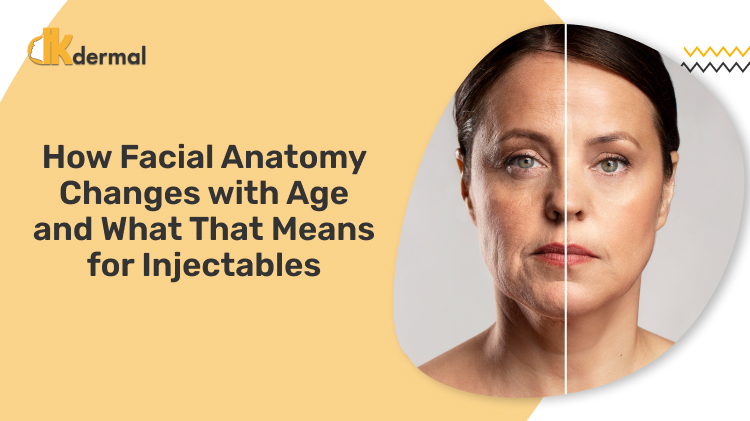
Aging changes nearly every layer of the lips. Bone resorption around the maxilla reduces support, collagen decreases, and the thin layer of superficial tissue gradually loses elasticity. The result is flattening of the vermilion, elongation of the cutaneous upper lip, and reduced dental show.
At the same time, blood flow may decrease and tissue regeneration slows. The natural contour softens, while the vermilion border becomes less distinct. Fine lines develop because repeated muscle activity weakens the overlying skin structure. Older patients often require structural support rather than simple volumization. In many cases, restoring architecture creates a more elegant outcome than adding bulk. This distinction separates refined aesthetic medicine from exaggerated enhancement trends.
The best treatment plans consider both static anatomy and dynamic expression. Filler should integrate into the face instead of sitting visibly within the tissue.
Racial differences in anatomy are clinically significant and should never be ignored during consultation or injection planning. Ethnic variations influence tissue thickness, vascular patterns, projection, and overall aesthetic ideals. What appears balanced in one population may look unnatural in another. Philtral columns vary in prominence among racial groups.
Patients of African descent often present with naturally fuller lips and stronger projection. Black patients generally have thicker lips than Caucasians. East Asian patients may have flatter midface support with different proportions between the vermilion and surrounding structures. Caucasians often have a more distinct Cupid’s bow shape, but frequently experience earlier thinning and volume loss with aging. Middle Eastern and Latin American patients may show increased lip definition and stronger contours naturally.
These anatomical distinctions affect both safety and aesthetics. An injector must evaluate:
An experienced injector adapts technique rather than following universal measurements. Personalized planning makes all the difference in maintaining harmony and respecting natural ethnic identity.
The lips contain a rich blood supply supplied mainly through branches of the facial artery. The superior labial artery and inferior labial arteries travel within the tissue plane, though their exact location may vary between individuals. This variability explains why injection safety depends heavily on anatomical awareness. The superior and inferior labial vessels may course closer to the mucosal surface in some patients and deeper in others. Because of this inconsistency, practitioners must avoid crucial lip arteries through controlled depth, slow movement, and continuous observation.
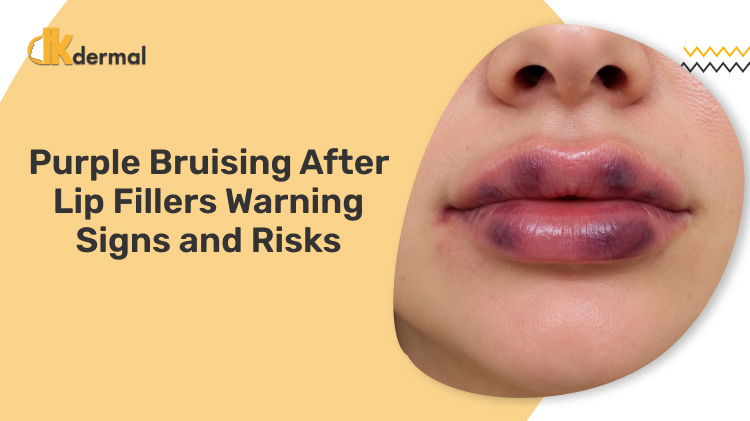
Complications become dangerous when filler enters a blood vessel accidentally. Intravascular placement may interrupt circulation and create vascular compromise. Reduced blood circulation can quickly progress to tissue necrosis if not recognized early.
When vascular occlusion is suspected, the provider must stop injecting immediately. Early management dramatically improves outcomes and reduces long-term injury risk.
Modern lip filler procedures rely on multiple injection styles depending on anatomy and treatment goals. There is no single filler lips technique suitable for every patient. The injector chooses depth, angle, product density, and distribution according to tissue characteristics. Common lip filler injection techniques include linear threading, tenting, microdroplet placement, and serial puncture methods. Some practitioners prefer a horizontal injection pattern along the vermilion border, while others use a method that involves vertical injections to increase central height and definition.
Precise placement is critical because even minor asymmetry becomes highly visible in the lips. Product inserted too superficially may create irregular texture or migration. Product placed too deeply may disappear visually and fail to improve contour.
The choice of hyaluronic acid filler also affects results. Softer gels integrate better into mobile tissue, while firmer products may provide more structural support in aging lips. Advanced techniques are sometimes necessary in complex cases involving asymmetry, scar tissue, or previous filler migration. However, sophistication should never replace caution. Minimizing risks remains more important than aggressive correction.
Even well-trained clinicians may encounter vascular complications or delayed inflammatory reactions. The difference between a minor issue and a serious outcome often depends on recognition speed and response quality. If vascular injury occurs, immediate intervention becomes essential. The practitioner should evaluate color change, pain intensity, capillary refill, and tissue temperature. Hyaluronidase is commonly used to dissolve hyaluronic acid filler in suspected ischemic events.
Patients should also receive clear aftercare instructions. Delayed swelling, persistent blanching, or severe discomfort must never be ignored. Clinicians should remember that patient safety is more important than completing the procedure. Conservative treatment strategies usually produce safer and more refined outcomes over time.
The most respected aesthetic outcomes rarely appear dramatic. Instead, they improve definition, hydration, proportion, and contour while preserving individuality. The goal is to achieve natural looking results that complement the face rather than dominate it.
Well defined lips depend on anatomical respect. Excessive filler can flatten natural curves and disrupt facial aesthetics. Patients often request large volume because they focus on photographs or social media trends, but professional guidance remains essential.
A skilled lip injector studies the entire face before treatment begins. Jawline shape, chin projection, dental support, and skin quality all influence lip appearance. Even subtle enhancement can produce meaningful improvement when integrated properly. Successful lip enhancement combines science and aesthetics. Anatomy guides safety, while artistic judgment determines proportion and balance. Together, these elements create results that appear effortless rather than artificial.
Understanding anatomy is not optional in aesthetic medicine. It is the foundation that supports every decision, from product selection to injection depth and emergency management. Practitioners who respect anatomical variation, adapt to aging changes, order lip fillers online from reliable providers and prioritize vascular safety consistently produce better outcomes with fewer complications. For patients, this knowledge helps identify qualified providers and encourages realistic expectations. In lip filler practice, technical skill matters, but anatomical understanding is what truly separates safe treatment from risky approximation.
Injectors study the location of the superior labial artery and other vascular structures before treatment to reduce the risk of accidental injection into a vessel.
A detailed assessment of the vermilion border, facial proportions, and tissue quality helps create balanced results with safer lip filler injections.
The cupid’s bow creates central definition and supports precise shaping, especially in patients seeking natural-looking contour refinement.
The labial arteries usually run within deeper tissue planes near the orbicularis oris muscle, although their exact position may vary between patients.
Good hydration, healthy circulation, and smooth transitions between the wet dry border and surrounding skin all contribute to a fresher appearance after lip augmentation.
One of the most serious complications is vascular occlusion, which can interrupt circulation and requires immediate medical attention.